
Temple Berith Sholom is fortunate to be the home of six Sefer Torah Scrolls. Each one is very special in its own right and has a history.
One Torah Scroll in particular, our “Holocaust Torah,” has a very special story which we have recently learned so much more about. The story is all the more meaningful as this Torah Scroll, with its larger size and print, is one which we often use for B’nai Mitzvah and High Holy Day services - and so is central to our synagogue practice.
Congregant Leesa Brand Terdiman was attending 5786 Rosh Hashanah services as Rabbi Debora Gordon brought out and introduced the Holocaust Sefer Torah before unrolling the Scroll. Leesa had just finished reading The Book Smugglers by David E. Fishman, a detailed account of the work to save Jewish treasures in Vilna Poland from the Nazis. Leesa was struck by the thought: Who saved our Sefer Torah and what is its history?
With Rabbi Gordon’s approval and support, Leesa set off on a fact-finding mission to solve the mystery and learn more about the history of this Scroll. It’s both a wonderful and sad story that spans Europe, involves Interpol, and centers on a number of dedicated people who enabled this Sefer Torah to find a home with Berith Sholom here in Troy, New York.
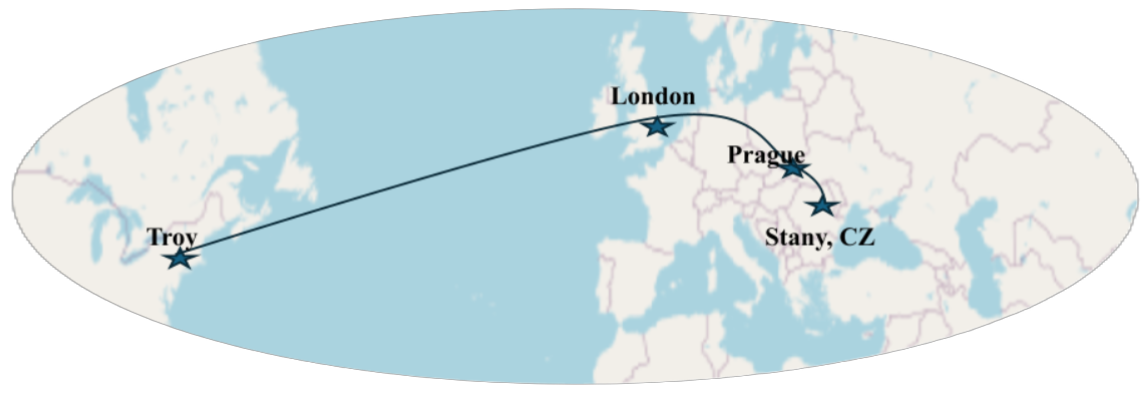
For almost 20 years after the end of World War II, a collection of Torah Scrolls from what was then known as Czechoslovakia were stored unattended in the Prague Michle Synagogue after being collected by the Nazis. Eventually hidden from the Nazis and later the Russians, this archive of Sefer Torahs came from Jewish communities in Bohemia and Moravia which had been decimated by the Holocaust. (Read the story of their collection on the Memorial Scrolls Trust website.) The Scrolls needed to be housed in better conditions and needed repair.
In 1964, through Mr. Eric Estorick, an art dealer with connections to sympathetic members of the Czechoslovakian government, arranged to acquire the Scrolls. Mr. Ralph Yablon, a founding member of Westminster Synagogue in London, England became aware of this situation. He provided the funding to acquire the Scrolls and arrange their careful transport to a non-commercial body. Working with the rabbi of Westminster Synagogue, Rabbi Dr. Harold Reinhart, an American born in Portland, Oregon, Mr. Yablon provided the funding to create a place to house and repair the Sefer Torah in a newly established space in Kent House, London, England. The 1564 Torah Scrolls in the collection travelled from Prague to London. Our Holocaust Torah is catalogued as 1160 of this collection.
The Westminster Synagogue went on to create a safe area to store the complete archive and the documentation associated with the collection, filling three rooms in their building. The synagogue administrator, Mrs. Ruth Shaffer, took over managing that archive for the next 40 years with great dedication. The Scrolls were catalogued, identified when possible, and graded according to their condition.
The story continues that about a year after the Scrolls arrived, a man knocked on the door of the Westminster Synagogue and asked if they had any Sefer Torahs which needed repair by an experienced sofer (Torah scribe). Mrs. Shaffer said, “We have 1564 of them. Please, come in.” Sofer David Eliahu Brand spent the next 27 years in the Kent House at Westminster Synagogue attending to the Sefer Torah there and ensuring that many could be rehomed for use in synagogues, schools and museums.
While the Sefer Torahs needed care, the wooden dowels upon which the parchment is rolled are called atzei chayim, “trees [wood] of life” also needed attention. The synagogue brought in skilled craftspeople to work on all the parts of the collection.
The Scrolls vary in age and size. Some of the Scrolls were quite small with tiny, elegant script and others were so heavy that they could hardly be lifted.
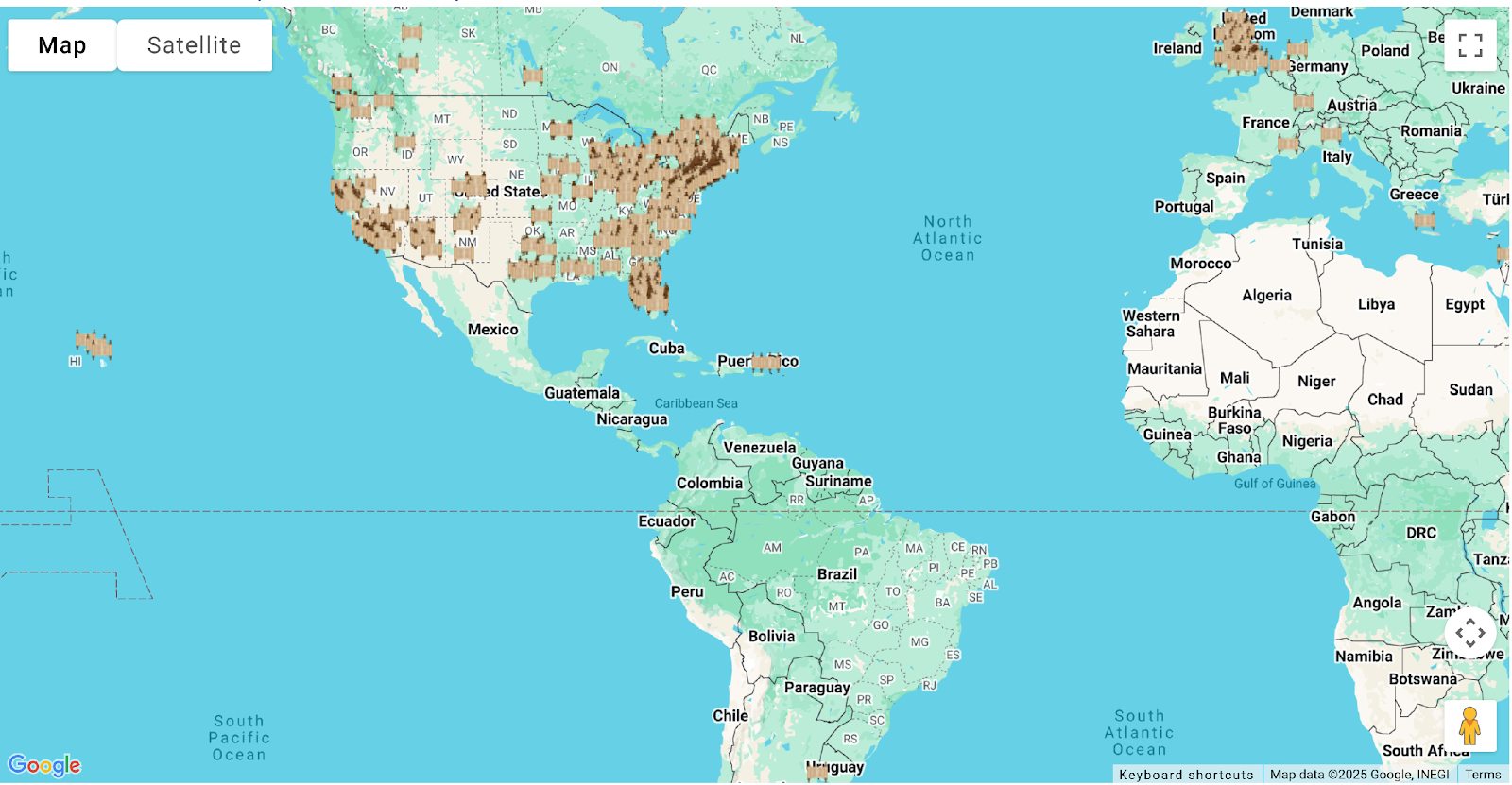
Eventually, the Westminster Synagogue, located in the Kent House, established the Czech Scroll Museum on the third floor of the building to house the collection. The organization has coordinated the loan of many of the 1564 Sefer Torahs to congregations around the world. They have been sent to Jewish communities in Great Britain and twenty other countries, including Germany. Today, about 1424 of the Sefer Torahs are on permanent loan to synagogues, museums, universities and Jewish retirement centers. The remaining Scrolls are in such poor condition that they cannot be restored and are carefully housed in the Kent House Museum.
Here are some of the places in which these Scrolls have been placed around the world (see below.)
The Holocaust Sefer Torah, so generously permanently loaned to Berith Sholom, has become central of our service. Its larger size and friendly font style makes it easier to read than some others and we frequently use it for B’nai Mitzvah and High Holy Days services.
Sadly, it seems that Sefer Torahs are the targets of theft around the world. In the early 1980’s and even later, there had been a spate of synagogue robberies in the United States.
On the night of June 16-17, 1981, thieves broke into the Berith Sholom Synagogue and stole four Torah Scrolls, their Kele Kodesh - the silver crowns, breastplates and yads, and a leather Megillah. All of these treasured Scrolls were in very good condition. They were never recovered.
Berith Sholom was left with a single Sefer Torah that had been housed outside the sanctuary and saved from the burglary. That Sefer Torah was in the portable ark in the air-conditioned Benjamin Social Hall, where the congregation held services in the summer. Contributions for new Sefer Torah came in from generous congregants, friends, other synagogues, and even non-Jewish congregations. The generosity was breathtaking but Sefer Torahs are expensive and Berith Sholom still needed a large Scroll for students to use that was easy to read and follow trop marks and was light enough to be lifted and carried.
Rabbi Jonathan Gerard, then rabbi of Berith Sholom, reached out to the Westminster Synagogue Torah Project to see if they might have a suitable Sefer Torah. Corresponding with Mrs. R. Schaffer, Rabbi Gerard requested a Scroll that met Berith Sholom requirements. On March 16, 1982, a letter was sent to Mrs. Schaffer, with a donation check for $700 to receive our Holocaust Sefer Torah on permanent loan. The Scroll was sent to Troy via cash-on-delivery (COD) for shipping costs.

Our Sefer Torah, 1160 of the collection, was shipped to Berith Sholom on June 15, 1982. Rabbi Julie Wolkoff later had the honor of notifying the Westminster Synagogue that the Sefer Torah had arrived safely, as we see in correspondence with Mrs. Shaffer. It met all of our requirements.
Very few, perhaps only 150 or so, of the 1564 Sefer Torahs in the Westminster collection were considered halachically kosher for use due to their abuse and damage caused by long-term storage in adverse conditions. Mrs. Schaffer informed Rabbi Gerard during their correspondence that none of the then available Scrolls were technically kosher even though they had been meticulously repaired by their skilled and observant sofer, David Brand. Like many other Reform and Progressive congregations, Berith Sholom still welcomed the Sefer Torah to become part of our permanent and treasured collection. Each time it is removed from the Ark, we recount its history and feel fortunate to have it in our care.
In 1982, Jewish organizations stepped up security to prevent further thefts. Mr. David Pollock and others founded the Universal Torah Registry, which created a database of Scrolls and created a process to mark the parchment. It uses a superfine needle to give the sacred Scrolls unique serial numbers. This coded process marks the Scrolls in a kosher way so they can be identified if any are ever stolen. Still, thefts have occurred but with much less frequency. The Registry's operations were suspended in December, 2017. No new registrations are being accepted, but existing records are available to law enforcement in the event of a theft. Mr. Pollock is now associate director of the Jewish Community Relations Council of New York.
The Holocaust Sefer Torah 1160 was registered with the Universal Torah Registry by Rabbi Julie Wolkoff in July of 1984.
In response to the thefts, the New York State enacted legislation in 1982 guiding the sale of Sefer Torahs. It requires that any business transactions regarding Torah Scrolls are recorded, disclosed, and include proof of provenance which can be validated.
Rabbi Gordon gave Leesa Terdiman the go-ahead and encouragement to reach out to the various organizations on behalf of Berith Sholom to learn more about our Holocaust Sefer Torah and the organization who sponsored its rescue.
As they say, “It takes a village…” Much appreciation to the Team for their effort to unravel the history, locate old files, and put together the story.
Rabbi Debora Gordon
Leesa Brand Terdiman
Andrew Dudziec – Office Manager
David Pollock - Universal Torah Registry
Zena Brand – Project Scribe
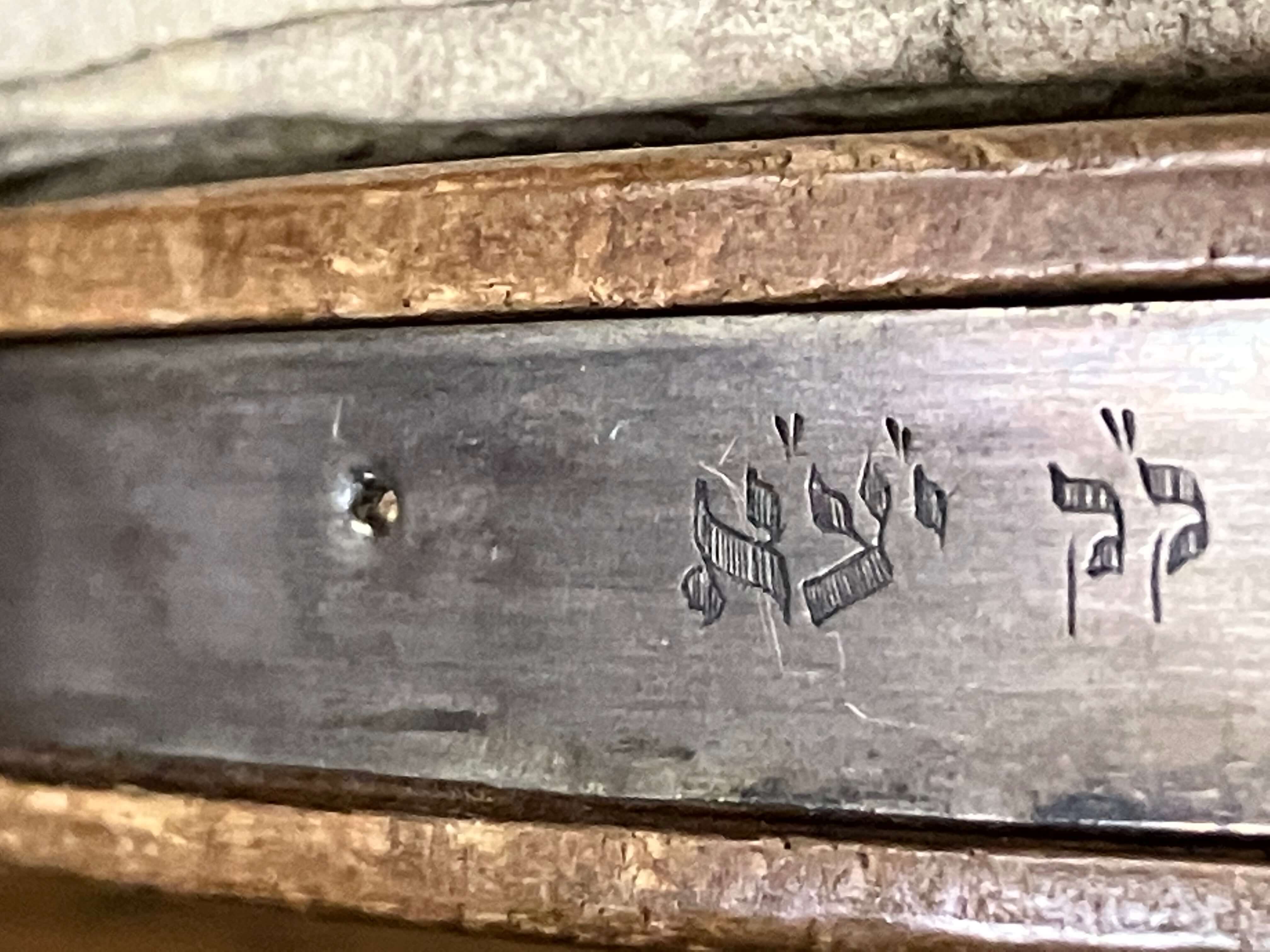
Photos of metal insets on the wooden dowels upon which the Holocaust Sefer Torah is rolled, the atzei chayim, “trees [wood] of life” appear below. These dowels may be original to the Sefer Torah, or they may have replaced damaged atzei chayim.
The translation of the plaques is approximately:
This Sefer Torah is the donation of the heart of the famous officer/official Avraham Vulf [abbreviation, probably an honorific], son of Mr. Chayim Leib, may his memory be a blessing. Who vowed from his own money to write it, and his spirit prompted him to give it to the synagogue of here, the holy community of [yud-ayin-alef]. As an eternal memorial for the soul of his modest first wife [abbreviation] Leah, may her memory be a blessing, daughter of the officer/official [abbreviation] Chayim [abbreviation] [abbreviation]. In the year 5606 (1845-1846). [At the end is an insignia or monogram composed of the letters lamed, pey, and kuf superimposed.]
Translation and photos by Rabbi Debora S. Gordon.




![Inscription on left-hand roller 09: (Tav)"(Resh)"(Vav) [insignia or monogram: Lamed+Pey+Kuf]](https://cdn.prod.website-files.com/60c15c6e87ac072b2841e574/69bad319f993309e47f3b118_Holocaust%20Memorial%20Torah%20Scroll%20inscription%202-09%20compressed.jpeg)
Resources
There is so much information available on this website including the history of the Scrolls prior to the war, the people who came together to save these Sefer Torah, the sofer David Brand, and founding members of the Westminster Synagogue at Kent House. There are also Zoom tours of the museum, books and educational materials available. Very interesting!
Universal Torah Registry - Wikipedia
The Universal Torah Registry was a project of the JCRC (Jewish Community Relations Council) of New York City, originally established in 1982, designed to protect and secure Torah Scrolls of Jewish communities, from theft. As these Scrolls may be valued at between $5,000 to $20,000 or more today, and could fetch similar amounts on the black market, synagogues have been a target of thieves. The UTR currently has approximately one thousand subscribing synagogues nationwide.
The registry's operations were suspended in December, 2017. No new registrations are being accepted, but existing records will be maintained and provided to law enforcement in the event of a theft.
Note:

167 Third Street
Troy, NY
12180
@2021 Congregation Berith Sholom. All Rights Reserved.